Langsett Reservoir Circular Walk
- Michael Palmer

- Jun 9, 2025
- 10 min read
Updated: 4 days ago
Langsett Reservoir Circular Walk – An Easy 5-Mile Walk Near Penistone
Looking for an easy reservoir walk in South Yorkshire with beautiful woodland, open countryside and views towards the Peak District?
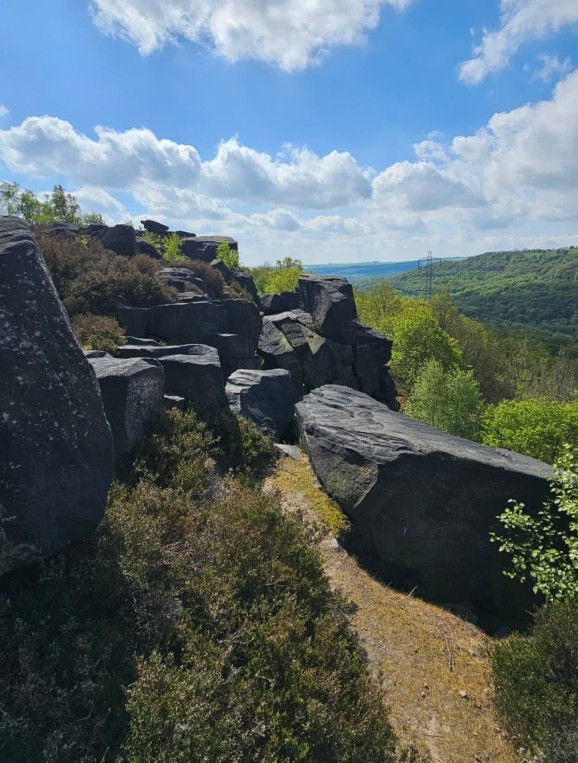
Our approximately 5-mile Langsett Reservoir Circular Walk explores one of the most attractive reservoirs around Penistone, taking you through woodland and countryside with some lovely views across the water.
Lyn and I personally walked, photographed and GPS recorded this route for The White Shire.
Based on our experience, we'd rate it as an easy walk.
Langsett Reservoir sits on the north-eastern edge of the Peak District National Park, less than five miles south-west of Penistone. It's surrounded by woodland and moorland, giving you the feeling of being much further into the Peak District than you actually are. (Yorkshire Water)
For us, it's exactly the sort of Yorkshire walk we enjoy: plenty of scenery, an interesting history and enough variety to keep the route enjoyable without being overly demanding.
Langsett Reservoir Walk at a Glance
Distance: Approximately 5 miles
Route type: Circular
Difficulty: Easy – based on our experience
Location: Langsett Reservoir
County: South Yorkshire
Nearby: Penistone, Stocksbridge and Barnsley
Landscape: Reservoir, woodland and moorland
Parking: Free parking available at Langsett Barn
Facilities: Parking, disabled parking, toilets, disabled toilet and picnic area
Highlights: Langsett Reservoir, woodland, views across the water, Little Don Valley and Peak District scenery
Walked and photographed by: Michael and Lyn Palmer, The White Shire
About Our Langsett Reservoir Circular Walk
Lyn and I found this a really enjoyable and relatively easy walk.
The existing White Shire article previously described it as moderate, but having walked the route ourselves, easy better reflects our experience.
There are naturally gradients and countryside paths along the way, so easy doesn't necessarily mean completely flat.
But overall, this isn't a route we found particularly demanding.
At around five miles, it's also a nice distance.
Long enough to feel you've had a proper walk, without taking over the entire day.
Where is Langsett Reservoir?
Langsett Reservoir lies close to the village of Langsett in South Yorkshire.
It's less than five miles south-west of Penistone and sits on the north-eastern edge of the Peak District National Park. (Yorkshire Water)
That location gives the landscape an interesting character.
You're still in South Yorkshire, but the scenery begins to feel increasingly like the Peak District.
Woodland rises from the reservoir.
Moorland stretches towards the higher ground.
And on a clear day, you can enjoy some beautiful views across the surrounding landscape.
Parking at Langsett Reservoir
One of the advantages of Langsett is that there's dedicated parking.
Yorkshire Water provides free parking at Langsett Barn, just off the A616. The postcode is S36 4GY. (Yorkshire Water)
There's also alternative parking at Langsett Flouch further west along the A616.
However, parking can be popular.
Yorkshire Water currently lists only 62 spaces at Langsett Barn and 24 at Langsett Flouch, and warns that both can fill quickly. (Yorkshire Water)
We'd therefore avoid assuming you'll always find a space immediately, particularly at busy times.
Langsett Reservoir: A Brief History
Langsett Reservoir wasn't created as a beauty spot.
It was built for a very practical reason.
Water.
As Sheffield expanded during the Industrial Revolution and Victorian period, its rapidly growing population and industries required increasingly reliable water supplies.
Reservoirs became an essential part of the infrastructure needed to support that growth.
Construction of Langsett Reservoir began in 1898 and the reservoir was completed in 1904. (Wikipedia)
More than a century later, it remains an important part of South Yorkshire's water-supply landscape.
Why Was Langsett Reservoir Built?
Sheffield's population grew enormously during the 19th century.
Its steel and manufacturing industries expanded.
New housing spread across the city.
All those homes and businesses needed water.
Reservoir building therefore became a major engineering undertaking.
Valleys around the Pennines provided suitable locations where water could be captured and stored before being transported towards urban areas.
Langsett was one of the reservoirs created as part of that expanding system.
Building Langsett Reservoir
Constructing a reservoir on this scale more than 120 years ago was a considerable engineering achievement.
Workers had to reshape the landscape, build the embankment and create the infrastructure necessary to control and transport enormous quantities of water.
Even getting workers and construction materials to Langsett proved difficult because much of what was needed had to come from Sheffield. (Wikipedia)
There were no modern construction vehicles or motorway networks to make the job straightforward.
Everything had to be organised within the technology and transport systems available at the end of the Victorian period.
One of Britain's Large Earth Embankments
The dam itself is one of the reservoir's most impressive engineering features.
Yorkshire Water describes Langsett as having one of the largest earth embankments in the UK. (Yorkshire Water)
That's easy to overlook when you're simply enjoying the scenery.
But the landscape you're walking around isn't entirely natural.
It's a huge piece of engineering.
The peaceful body of water exists because people deliberately transformed the valley more than a century ago.
How Much Water Does Langsett Reservoir Hold?
Quite a lot.
Yorkshire Water says Langsett has a capacity of more than 1.4 billion gallons and describes it as the largest supply reservoir in the Sheffield district. (Yorkshire Water)
The reservoir continues to help provide water for Sheffield and Barnsley.
So although we enjoy it as somewhere to walk, Langsett still performs the job it was created to do.
The Little Don River
Langsett Reservoir is fed by the Little Don River, which is also sometimes known as the Porter.
The river rises amongst the surrounding moorland before flowing through this landscape.
Building the reservoir effectively interrupted the natural river valley and created the large body of water we see today.
Below the dam, the Little Don continues eastwards.
Water therefore remains central to both the natural and engineered landscape around Langsett.
Langsett Before the Reservoir
It's easy to think the reservoir has always been here.
It hasn't.
Before construction began, this was a river valley.
People farmed the surrounding landscape.
Tracks crossed the countryside.
Communities used the land.
When reservoir construction began at the end of the 19th century, the appearance and purpose of the valley changed permanently.
That's something Lyn and I find fascinating about reservoir walks.
You're enjoying beautiful scenery, but you're also walking through a landscape created by human engineering.
Langsett Village
The nearby village of Langsett is much older than the reservoir.
The settlement existed centuries before Victorian engineers arrived.
Its position close to old routes across the Pennines meant people had been travelling through the area for generations.
Farming was important, as it was throughout much of rural Yorkshire.
Today, Langsett remains a small settlement, but the reservoir has made its name familiar to walkers from across Yorkshire.
Old Routes Across the Pennines
Long before people came here for recreational walking, tracks crossed the surrounding hills.
People needed to travel between Yorkshire communities and settlements on the other side of the Pennines.
Packhorses transported goods.
Farmers moved animals.
Travellers followed routes through valleys and across moorland.
Some of the paths we enjoy today therefore sit within a landscape with a much longer history of human movement.
Walking Through Langsett Woods
Woodland is one of the things we particularly enjoyed about this route.
The trees provide a completely different atmosphere from the open reservoir views.
One minute you're looking across the water.
The next you're beneath a woodland canopy.
That variety makes a huge difference.
For us, a five-mile route becomes considerably more enjoyable when the scenery keeps changing.
Ancient and Plantation Woodland
The landscape around reservoirs is often heavily wooded.
Some woodland has much older origins, while other areas were planted as part of later land management.
Trees help stabilise soils and create valuable habitats.
They also make reservoirs attractive places for recreation.
Today, woodland around Langsett provides habitat for birds, mammals and countless smaller species.
Wildlife at Langsett Reservoir
There's plenty to look out for.
Yorkshire Water highlights birds including treecreepers, owls and woodpeckers around Langsett. (Yorkshire Water)
The mixture of woodland, water and moorland creates several different habitats within a relatively small area.
That's another reason we like reservoir walks.
Water naturally attracts wildlife, while the surrounding vegetation provides feeding and nesting opportunities.
Walking Beside the Water
The reservoir naturally dominates much of the scenery.
There's something particularly relaxing about walking beside water.
The view constantly changes as you move around the shoreline.
Wind alters the surface.
Clouds create reflections.
Woodland appears across the water.
And because you're walking rather than driving past, you get time to actually appreciate it.
Moorland Above Langsett
Higher ground around Langsett introduces you to another landscape entirely.
Moorland stretches towards the Peak District.
Yorkshire Water specifically highlights the views from Midhope Moors as one of the attractions of walking around Langsett. (Yorkshire Water)
This is where Langsett's location becomes particularly noticeable.
You're right on the transition between South Yorkshire's Pennine countryside and the Peak District.
Langsett Moor and Public Access
The moorland around Langsett also has an interesting place in the history of countryside access.
The Peak District National Park records that an access agreement for Langsett Moor was signed in 1961. (Peak District National Park)
That sits within a much bigger story.
For generations, walkers campaigned for the right to access Britain's moorland.
Many landscapes we freely enjoy today weren't always freely accessible.
It's easy to take our walking rights for granted.
The Peak District National Park
Langsett sits at the north-eastern edge of the Peak District National Park.
The Peak District became Britain's first National Park in 1951.
Its creation followed decades of campaigning for countryside protection and public access.
Today, millions of people visit the National Park for walking, cycling and simply enjoying the landscape.
Langsett provides a useful gateway into its quieter north-eastern corner.
Is the Langsett Reservoir Walk Difficult?
Based on our experience, we'd rate our approximately five-mile route as easy.
That's different from the moderate rating previously shown on The White Shire page.
Having walked it, Lyn and I think easy is a better description of our particular route.
However, there are gradients and countryside paths.
Conditions can also change significantly following rain.
Yorkshire Water's own longer routes include steeper and potentially muddy sections, so don't assume every possible circuit around Langsett is equally easy. (Yorkshire Water)
Our rating applies specifically to the White Shire route we walked.
How Long is the Langsett Reservoir Walk?
Our White Shire route is approximately 5 miles.
How long you'll need depends on your pace and how often you stop.
Lyn and I don't particularly rush.
We're taking photographs, looking around and generally enjoying where we are.
For a walk like Langsett, we'd allow plenty of time.
There's little point walking somewhere this attractive and spending the entire time watching the clock.
Can You Walk Around Langsett Reservoir?
Yes.
There are several walking options around Langsett.
Yorkshire Water itself publishes routes from the reservoir, including shorter and longer options. (Yorkshire Water)
Our White Shire route is the approximately five-mile walk personally completed and GPS recorded by Lyn and me.
That distinction is useful because you'll find several different "Langsett Reservoir walks" online with different distances.
Is There a Shorter Langsett Reservoir Walk?
Yes.
If our five-mile route sounds longer than you'd like, Yorkshire Water has a 2.5-mile shorter route.
Most of that route uses well-surfaced paths, although Yorkshire Water notes that there are still a couple of steeper sections. (Yorkshire Water)
So Langsett can work well for people looking for different walking distances.
Are There Toilets at Langsett Reservoir?
Yes.
Yorkshire Water currently lists toilets and disabled toilets amongst the facilities at Langsett Reservoir. (Yorkshire Water)
There's also disabled parking and a picnic area.
That makes Langsett particularly convenient compared with some of the more remote countryside walks Lyn and I do.
Can You Swim in Langsett Reservoir?
No.
Yorkshire Water specifically tells visitors not to swim in Langsett Reservoir. (Yorkshire Water)
Reservoirs may look inviting, particularly in hot weather, but they're working water-supply environments and can contain hazards that aren't obvious from the shore.
We'd stick to enjoying the views from dry land.
Are Dogs Allowed at Langsett Reservoir?
Dogs can be taken around Langsett, but Yorkshire Water asks visitors to keep dogs on leads and clean up after them. (Yorkshire Water)
As always, we'd also pay attention to livestock and any signs or temporary restrictions encountered along the route.
Is Langsett Reservoir Worth Visiting?
We think so.
It's easy to reach from Penistone, Barnsley and Sheffield.
There's free parking.
There are toilets.
And you have a lovely mixture of reservoir, woodland and moorland scenery.
For us, the approximately five-mile White Shire route provides a really enjoyable introduction to the area.
Is Langsett Reservoir Good for Beginners?
Based on our experience of our particular route, we'd consider it suitable for many people comfortable walking approximately five miles through countryside.
We've rated it easy.
However, "easy" is relative.
Five miles is still five miles.
There are gradients, and conditions underfoot can change.
If you're completely new to walking, Yorkshire Water's shorter 2.5-mile route may be a useful alternative.
What Footwear Would We Recommend?
We'd wear walking shoes or boots.
Even on an easy walk, countryside conditions can change.
Rain can create muddy areas.
Tree roots and uneven paths require more grip than a pavement.
And weather around the Pennines can change surprisingly quickly.
Good footwear simply makes the walk more comfortable.
When is the Best Time to Walk at Langsett Reservoir?
We'd happily walk here throughout the year.
Spring brings fresh woodland growth.
Summer provides long daylight hours.
Autumn could be particularly attractive when the trees surrounding the reservoir begin changing colour.
Winter gives the landscape a completely different character.
Recent weather probably matters more than the season.
After prolonged rain, expect wetter and muddier countryside sections.
What Else Can You Explore Near Langsett?
Penistone is an obvious place to combine with your walk.
It's a historic South Yorkshire market town with cafés and places to stop after you've finished walking.
Stocksbridge is also nearby.
And if you fancy another reservoir walk, this part of Yorkshire and the neighbouring Peak District gives you plenty of options.
Explore More of South Yorkshire
If you've enjoyed Langsett Reservoir, there are plenty more places to discover with us.
Every White Shire walking guide is based around a route we've actually walked ourselves.
You can also explore our complete collection:
Or if you're looking for somewhere else to visit:
About Michael and Lyn
Michael and Lyn Palmer explore Yorkshire together on foot, personally walking, photographing and GPS recording the routes featured on The White Shire.
Our walking guides combine our first-hand experience with practical information, local history and the character of the towns, villages and countryside we discover along the way.
We're not professional hikers.
We simply enjoy getting out together, discovering somewhere new and seeing more of Yorkshire on foot.
Langsett Reservoir is exactly the sort of walk we enjoy.
It's relatively easy, has plenty of changing scenery and combines woodland, water and moorland with an interesting piece of South Yorkshire's industrial history.
Langsett Reservoir Circular Walk
Our GPS-recorded Langsett Reservoir Circular Walk is approximately 5 miles.
Based on our own experience, Lyn and I would rate it as an easy walk.
There's free parking at Langsett Barn, although we'd recommend arriving with a backup plan during busy periods because the car parks can fill quickly. (Yorkshire Water)
Take your time through the woodland and stop to enjoy the views across the reservoir.
And remember that the peaceful lake in front of you isn't natural.
More than 120 years ago, engineers and labourers transformed this valley to provide water for the rapidly expanding communities of South Yorkshire.
Today, we get the added benefit of enjoying a beautiful place to walk.


Comments