West Haigh Wood & Spring Country Park Circular Walk
- Michael Palmer

- Oct 16, 2025
- 11 min read
Updated: 4 days ago
West Haigh Wood & Spring Country Park Circular Walk – 4.28 Easy Miles Near Barnsley
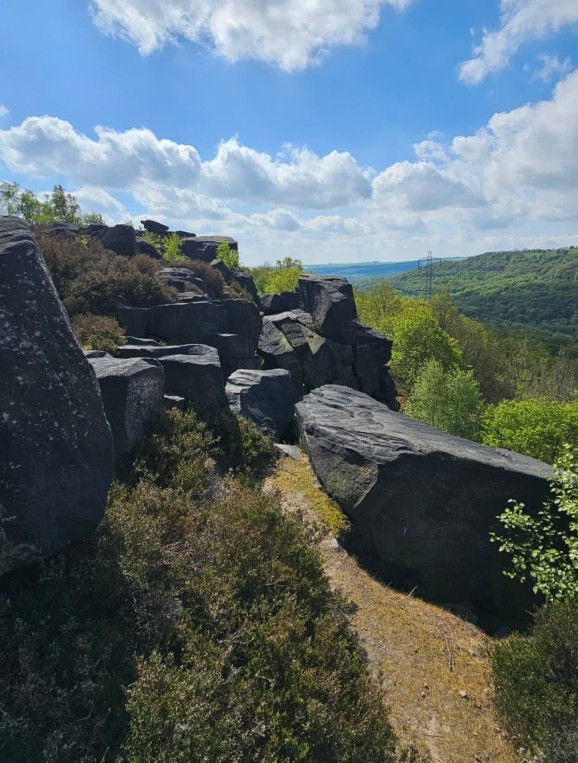
Looking for an easy woodland walk near Barnsley? Our 4.28-mile West Haigh Wood & Spring Country Park Circular Walk explores an interesting mixture of ancient woodland, regenerated green space and the former mining landscape around Grimethorpe in South Yorkshire.
Lyn and I personally walked, photographed and GPS recorded this route for The White Shire.
We found it to be a nice, easy and enjoyable walk.
At just 4.28 miles, it's a good choice when you fancy a relatively short walk, but there's considerably more to discover here than the mileage might suggest.
West Haigh Wood is an ancient woodland and Local Nature Reserve, while the surrounding Grimethorpe landscape tells a completely different story of coal mining, industry, regeneration and nature gradually reclaiming former industrial land.
West Haigh Wood & Spring Country Park Walk at a Glance
Distance: 4.28 miles
Route type: Circular
Difficulty: Easy
Location: Grimethorpe, South Yorkshire
Area: Barnsley / Dearne Valley
Nearby: Brierley, Cudworth, Great Houghton and Barnsley
Terrain: Woodland paths, country park paths, tracks and open green space
Highlights: West Haigh Wood, Spring Country Park, ancient woodland, wildlife, Grimethorpe's mining heritage and regenerated countryside
Walked and photographed by: Michael and Lyn Palmer, The White Shire
About Our West Haigh Wood & Spring Country Park Walk
Lyn and I found this to be a nice, easy walk.
At 4.28 miles, it's also a useful distance if you fancy a few hours outside without committing yourself to one of our longer Yorkshire walks.
But what makes this route particularly interesting is the contrast between the different landscapes.
West Haigh Wood is ancient.
The surrounding countryside contains centuries of history.
Then you have the much more recent industrial story of Grimethorpe and the South Yorkshire coalfield.
Put everything together and you have a landscape that has changed enormously over time.
Where is West Haigh Wood?
West Haigh Wood is situated near Grimethorpe in the Metropolitan Borough of Barnsley, South Yorkshire.
The woodland lies within the wider Dearne Valley landscape.
It's approximately 38 hectares in size and provides a substantial area of established woodland close to communities that were once dominated by coal mining.
Today, West Haigh Wood is recognised as a Local Nature Reserve.
For Lyn and me, it's another example of how much green space there is to discover around Barnsley.
West Haigh Wood – An Ancient Woodland
West Haigh Wood isn't simply a collection of recently planted trees.
It's ancient woodland.
Ancient woodland in England is generally land that has been continuously wooded since at least 1600.
That doesn't necessarily mean every individual tree is hundreds of years old.
Trees naturally die, fall and regenerate.
What matters is the continuity of woodland habitat.
That continuity allows complex soils, plants, fungi, insects and other wildlife to develop over very long periods.
It makes ancient woodland particularly valuable.
A Woodland with Medieval Roots
The history of West Haigh Wood stretches back centuries.
Historical evidence indicates the woodland existed during the medieval period.
Old woodland boundaries and banks survive in parts of the landscape.
These features help show that people were managing and using the woodland long before the industrial communities we associate with this part of South Yorkshire developed.
That's something worth thinking about while you're walking through it.
Grimethorpe is famous for coal mining.
But parts of this landscape are much older than the pits.
What is an Ancient Wood Bank?
Historic wood banks were created to define woodland boundaries.
They could help separate managed woodland from surrounding farmland and sometimes helped control livestock.
Over centuries, the banks became permanent features within the landscape.
Some of the historic banks around West Haigh Wood are complex and may have developed through several different phases.
For walkers today, they're easy to overlook.
But once you know what you're looking at, they become another clue to the age of the woodland.
Oak Woodland
Oak is one of the characteristic trees within West Haigh Wood.
Mature oak woodland provides valuable habitat.
The trees themselves support an enormous variety of wildlife.
Their bark, leaves, flowers, acorns and deadwood all provide food or shelter for different species.
Older woodland also develops a more complicated structure than newly planted areas.
You have mature trees, younger regeneration, fallen timber and a woodland floor that has developed over centuries.
For wildlife, that variety matters.
Woodland Wildlife
West Haigh Wood is particularly valuable for birds.
The mixture of mature trees, understorey vegetation and woodland edges provides feeding and nesting opportunities.
Insects, mammals and fungi also benefit from established woodland habitats.
Lyn and I aren't expert naturalists.
We're simply interested in what we see while we're out walking.
And woodland is one of those environments where slowing down makes a big difference.
If you're only concentrating on completing the mileage, you'll miss half of what's around you.
Spring in West Haigh Wood
As the name of the wider route suggests, spring is a particularly attractive time to explore woodland.
Fresh leaves begin appearing on the trees.
Woodland plants take advantage of the light reaching the forest floor before the canopy fully develops.
Bird activity increases.
Everything suddenly feels greener.
But we wouldn't restrict this walk to one season.
Woodland changes constantly throughout the year.
Summer Walking
During summer, the tree canopy creates a completely different atmosphere.
The woodland becomes greener and more enclosed.
On warmer days, walking beneath mature trees can also provide welcome shade.
Vegetation becomes fuller and views through the woodland become more limited.
That's part of what makes repeating woodland walks worthwhile.
The same route can look completely different only a few months apart.
Autumn Colours
Autumn could be one of the best times to explore West Haigh Wood.
Oak and other deciduous trees begin changing colour.
Leaves cover the paths.
Fungi become increasingly noticeable.
The woodland starts preparing for winter.
For Lyn and me, autumn woodland walks are amongst some of the best walks we do.
You don't need dramatic mountains when the trees are putting on a show.
Winter in the Woods
Winter changes everything again.
Once the leaves have fallen, views open up through the trees.
The shape and structure of the woodland becomes much easier to see.
Old boundary banks and landscape features can also become more obvious.
Conditions underfoot can naturally become wetter and muddier.
So while we've rated our route easy, we'd still recommend sensible footwear after prolonged rain.
Grimethorpe: A Brief History
Grimethorpe is a village east of Barnsley in South Yorkshire.
For much of its earlier history, the surrounding landscape was predominantly rural.
Farming and woodland shaped the area.
That changed dramatically with the expansion of coal mining.
Coal transformed Grimethorpe from a relatively small settlement into one of South Yorkshire's best-known mining communities.
For generations, the pit dominated local employment and community life.
Grimethorpe Colliery
Grimethorpe Colliery became one of the major pits of the South Yorkshire coalfield.
Mining transformed the village.
Housing expanded.
Families moved into the area for work.
Railways and industrial infrastructure became part of the landscape.
For much of the 20th century, coal wasn't simply an industry here.
It shaped the identity of the entire community.
Life in a Mining Community
Mining communities developed strong social networks.
Generations of families often worked at the same pit.
Clubs, pubs, sports teams and brass bands became important parts of community life.
Working underground could be extremely dangerous.
But the industry also created a strong shared identity.
When collieries eventually closed, communities didn't simply lose a workplace.
They lost an industry around which much of everyday life had developed.
Grimethorpe Colliery Band
One of the most famous parts of Grimethorpe's mining heritage is its brass band.
Grimethorpe Colliery Band became internationally known.
Brass bands developed strong connections with mining communities throughout Yorkshire and northern England.
Collieries often supported bands as part of the social and cultural life surrounding the pits.
The tradition survived even as the coal industry disappeared.
Today, Grimethorpe's name remains recognised far beyond South Yorkshire partly because of its brass-band heritage.
Brassed Off
Grimethorpe's brass-band tradition reached an even wider audience through the film Brassed Off.
The film told the fictional story of a colliery brass band facing the closure of its pit.
Although fictional, it reflected the real experiences of mining communities during the industry's decline.
Grimethorpe Colliery Band provided the musical performances heard in the film.
That connection introduced millions of people to the sound and culture of South Yorkshire's mining bands.
The Closure of the Colliery
The decline of Britain's deep coal-mining industry brought enormous change to Grimethorpe.
When the colliery eventually closed, employment disappeared and large areas of industrial land became redundant.
The economic and social consequences were considerable.
But the physical landscape also began changing.
Industrial buildings disappeared.
Spoil heaps were reshaped.
Former mining land was reclaimed.
Nature gradually returned.
A Regenerated Landscape
This is one of the things that makes our West Haigh Wood and Spring Country Park walk particularly interesting.
You're walking through two very different types of green landscape.
West Haigh Wood represents continuity.
It has been woodland for centuries.
Other areas represent regeneration.
They've become green because the industry that once occupied the landscape has disappeared and the land has been restored.
Seeing both within one walk tells a much bigger story about South Yorkshire.
Spring Country Park
Spring Country Park provides another green element to our route.
The open country park landscape contrasts nicely with the more enclosed environment of West Haigh Wood.
This gives the walk variety.
One section can feel like a traditional woodland walk.
Another opens up into a landscape shaped much more recently.
For a relatively short 4.28-mile route, we think that change of scenery works particularly well.
The Dearne Valley
Grimethorpe sits within the wider Dearne Valley.
The valley became one of South Yorkshire's major industrial landscapes.
Coal mining, railways and associated industries transformed communities throughout the area.
Barnsley, Wombwell, Cudworth, Goldthorpe, Thurnscoe and numerous surrounding villages were all influenced by coal.
Today, the story is changing again.
Former industrial sites are becoming wetlands, woodland, grassland and country parks.
Nature Returning to the Dearne Valley
The return of nature throughout the Dearne Valley has been remarkable.
Wetlands have developed.
New woodland has been planted.
Former colliery sites have been restored.
Old railway corridors have become walking and cycling routes.
Meanwhile, older habitats such as West Haigh Wood have survived.
Put everything together and you have a network of green spaces running through a landscape that was once one of Britain's industrial heartlands.
A Landscape with Layers of History
This is what we particularly enjoy about walks like this.
At first glance, you might simply see trees and paths.
But the landscape contains several completely different periods of history.
There is ancient woodland.
There are traces of medieval land management.
There is the agricultural landscape.
Then there's the enormous impact of coal mining.
Finally, there's modern regeneration.
You're effectively walking through centuries of change in just over four miles.
Medieval Archaeology
West Haigh Wood isn't only interesting for its trees.
The wider historic landscape includes archaeological features associated with medieval land use.
A medieval enclosure has been identified within the woodland.
Features like this help demonstrate that the countryside wasn't empty before industrialisation.
People had been farming, managing woodland and organising land here for generations.
Coal mining changed the landscape dramatically.
But it didn't create its history.
Why Ancient Woodland Matters
Ancient woodland is effectively irreplaceable.
You can plant new trees.
And creating new woodland is extremely valuable.
But you can't instantly recreate centuries of ecological continuity.
Ancient woodland soils contain complex communities of fungi and microorganisms.
Plants have had generations to establish.
Deadwood habitats develop.
Species become adapted to particular conditions.
That's why protecting surviving places like West Haigh Wood matters.
Is the West Haigh Wood Circular Walk Difficult?
No.
Lyn and I found our 4.28-mile West Haigh Wood & Spring Country Park Circular to be an easy walk.
We didn't encounter anything we'd describe as particularly demanding.
That makes it a good option if you're looking for an easy woodland walk near Barnsley.
As always, weather can change conditions.
Woodland paths can become muddy following prolonged rain.
We'd therefore still recommend suitable walking footwear.
How Long is the West Haigh Wood Walk?
Our GPS-recorded route measures approximately 4.28 miles.
How long you'll need depends on your own pace and how often you stop.
Lyn and I don't particularly rush.
We're normally taking photographs, looking around and trying to discover more about the places we're exploring.
At just over four miles, this is a nice distance for a few hours outside.
Is West Haigh Wood Good for Walking?
We think so.
If you enjoy woodland walks, there's plenty to appreciate.
The woodland is large enough to give you a genuine sense of being surrounded by trees.
Our route also combines West Haigh Wood with Spring Country Park and the surrounding landscape.
That gives you considerably more variety than simply completing a short circuit through the trees.
Is West Haigh Wood a Nature Reserve?
Yes.
West Haigh Wood is designated as a Local Nature Reserve.
Barnsley Council owns and manages the reserve.
It's one of a small number of council-owned Local Nature Reserves within the Barnsley borough.
Its ancient woodland habitat makes it particularly valuable for wildlife.
Is West Haigh Wood Ancient Woodland?
Yes.
West Haigh Wood is recognised as ancient woodland.
The woodland has survived despite the enormous industrial changes that took place around Grimethorpe.
That's one of the most remarkable things about it.
Coal mining transformed much of the surrounding landscape.
Yet this pocket of much older woodland remained.
Is Grimethorpe Good for Walking?
You might not immediately think of Grimethorpe as a walking destination.
That's understandable given its industrial reputation.
But the surrounding landscape contains considerably more green space than many people realise.
West Haigh Wood, regenerated land and other Dearne Valley green spaces provide plenty of opportunities for walking.
For us, discovering places like this is exactly what The White Shire is about.
Is the Walk Suitable for Beginners?
Based on our own experience, we'd consider this one of our easier routes.
At 4.28 miles, the distance is also relatively manageable.
If you're new to walking, we'd still recommend checking the weather, wearing suitable footwear and allowing plenty of time.
There's no prize for completing it quickly.
Enjoy the woodland and take your time.
What Else Can You Explore Nearby?
The wider Dearne Valley has plenty more to discover.
Rabbit Ings Country Park is another excellent example of former mining land transformed for wildlife and recreation.
Dearne Valley Park near Barnsley offers riverside and woodland walking.
RSPB Old Moor is one of the area's best-known wildlife reserves.
There are also plenty of other walks around Barnsley, Doncaster and the wider South Yorkshire area.
See what's on in South Yorkshire for events, shows, festivals and ideas for another day out.
When is the Best Time to Walk at West Haigh Wood?
We'd happily consider this route throughout the year.
Spring is excellent for fresh woodland growth.
Summer brings a full green canopy and plenty of shade.
Autumn gives you changing leaves and woodland colour.
Winter opens up views through the trees.
Recent weather is probably more important than the season.
After prolonged rain, woodland paths may naturally become muddy.
Explore More of South Yorkshire
If you've enjoyed discovering West Haigh Wood and Spring Country Park, there are plenty more places to explore with us around South Yorkshire.
Discover more South Yorkshire circular walks and find another route personally walked, photographed and GPS recorded by Michael and Lyn.
Or explore our complete collection of Yorkshire walks, covering routes across South, West, North and East Yorkshire.
Looking for somewhere else to explore? Discover South Yorkshire attractions and interesting places to visit.
About Michael and Lyn
Michael and Lyn Palmer explore Yorkshire together on foot, personally walking, photographing and GPS recording the routes featured on The White Shire.
Our walking guides combine first-hand experience with practical route information, local history and the character of the places we discover along the way.
We're not professional hikers – we simply enjoy getting out together, finding somewhere interesting to walk and discovering more of Yorkshire as we go.
West Haigh Wood is a great example.
It's a nice, easy 4.28-mile walk through ancient woodland and regenerated green space, surrounded by a landscape that tells the story of rural Yorkshire, coal mining and the Dearne Valley's transformation.
West Haigh Wood & Spring Country Park Circular Walk
View our GPS-recorded 4.28-mile West Haigh Wood & Spring Country Park Circular below and use it to help plan your own walk around Grimethorpe.
Based on our own experience, Lyn and I would rate this as an easy walk.
Take your time through West Haigh Wood.
It's easy to think you're simply walking through some trees, but this woodland has survived for centuries.
And when you emerge into the surrounding landscape, remember how different this part of South Yorkshire looked when coal mining dominated Grimethorpe.
Ancient woodland on one side and a regenerated industrial landscape on the other.
That's what makes this relatively short walk so interesting.


Comments