
Wharram Percy Circular Walk

Updated: Aug 5

Wharram Percy Circular Walk – An Easy Walk to Yorkshire’s Famous Deserted Medieval Village
Looking for an unusual walk in the Yorkshire Wolds? Our Wharram Percy Circular Walk takes you through beautiful North Yorkshire countryside to one of the most fascinating archaeological sites in Yorkshire – the deserted medieval village of Wharram Percy.
Lyn and I personally walked, photographed and GPS recorded this route for The White Shire.
We found it to be an easy and thoroughly enjoyable walk.
But this isn't simply a countryside walk.
Wharram Percy is one of Britain's largest and best-preserved deserted medieval villages, and once you know what you're looking at, the grass-covered earthworks, ruined church, former houses and millpond bring a lost Yorkshire community back to life.
It's a fascinating place.
Wharram Percy Circular Walk at a Glance
Route type: Circular
Difficulty: Easy – based on our own experience
Location: Wharram Percy, North Yorkshire
Area: Yorkshire Wolds
Nearby: Wharram-le-Street, Malton and Thixendale
Terrain: Countryside paths, tracks, grassland and some steeper sections around the deserted village
Highlights: Wharram Percy Deserted Medieval Village, St Martin's Church, medieval house platforms, millpond, archaeological remains and Yorkshire Wolds scenery
Parking: English Heritage parking is available near the site
Walked and photographed by: Michael and Lyn Palmer, The White Shire
About Our Wharram Percy Walk
This is one of those Yorkshire walks where the destination is every bit as important as the walk itself.
Lyn and I found the route easy overall.
But when you arrive at Wharram Percy, we'd definitely recommend slowing down.
At first glance, you might see a ruined church surrounded by grassy fields.
Look more carefully.
Those humps, banks and depressions in the grass aren't random.
They're the remains of roads, houses, farm buildings and boundaries belonging to a village where generations of Yorkshire families lived and worked.
Once you understand that, Wharram Percy becomes a completely different place.
Where is Wharram Percy?
Wharram Percy lies within the Yorkshire Wolds in North Yorkshire, between Malton and Driffield.
The deserted village occupies a remote valley close to Wharram-le-Street.
That isolation is part of its atmosphere.
There isn't a modern village built over the medieval remains.
Instead, the landscape has preserved the outline of the settlement remarkably well.
Today, the site is cared for by English Heritage.
Parking at Wharram Percy
There is an English Heritage car park near Wharram Percy.
You can't drive directly to the deserted village.
From the car park, you have to walk approximately three-quarters of a mile to reach the site.
English Heritage currently charges non-members for parking, while qualifying members can park free.
We'd recommend checking the latest parking information before travelling because charges and arrangements can change.
The walk from the car park to the village includes some steeper sections and can become muddy.
Is Wharram Percy Free to Visit?
Wharram Percy Deserted Medieval Village is free to enter.
The site is generally accessible during reasonable daylight hours.
There may, however, be a charge for parking.
We'd always check the latest English Heritage visitor information before making a special journey.
Wharram Percy: A Brief History
Wharram Percy is one of Britain's most famous deserted medieval villages.
People occupied the village continuously for around 600 years.
The medieval settlement probably developed during the 9th or 10th century and reached its greatest prosperity between the 12th and early 14th centuries.
During that period, Wharram Percy contained manor houses, peasant homes, farm buildings, a church and a mill.
It wasn't an insignificant collection of cottages.
This was a functioning rural community.
By the early 16th century, however, Wharram Percy was almost completely deserted.
Before the Medieval Village
The history of this landscape goes back much further than the Middle Ages.
Archaeological evidence shows settlement in the Wharram Percy area around 50 BC.
People were therefore living and travelling through this Yorkshire Wolds valley more than a thousand years before the medieval village developed.
An ancient track crossed the valley.
Parts of that route were already being used around the Iron Age and possibly earlier.
It's remarkable to think about that while you're walking into Wharram Percy today.
People have been travelling through this landscape for more than 2,000 years.
The Medieval Village Develops
Wharram Percy probably developed into a recognisable village during the Anglo-Saxon period.
By the Middle Ages, the settlement had become much more organised.
Houses were arranged in rows.
Families farmed the surrounding land.
Manor houses reflected the status of the local landowners.
St Martin's Church stood at the religious heart of the community.
A watermill provided another essential part of village life.
Today, archaeology allows us to reconstruct much of that lost settlement.
The Percy Family
The Percy name is one of the most famous aristocratic names in northern English history.
Members of the Percy family held Wharram during the Middle Ages.
The village flourished particularly between the 12th and early 14th centuries when the Percys were associated with the settlement.
The family eventually became one of the most powerful dynasties in northern England.
Their name survives here in Wharram Percy centuries after the village itself disappeared.
What Did Wharram Percy Look Like?
At its height, Wharram Percy would have looked completely different from the peaceful grassy valley you see today.
There were rows of houses.
Farm buildings stood alongside them.
People cultivated strips of land in the surrounding fields.
Livestock moved through the village.
Smoke rose from homes.
Children played.
People attended St Martin's Church.
The village also contained two manor houses.
Archaeological evidence suggests there were around 40 peasant houses and associated outbuildings.
This was a living community.
Medieval Houses at Wharram Percy
Most ordinary medieval homes weren't built from materials designed to survive for centuries.
Timber, earth and thatch were common.
Once houses were abandoned, they gradually collapsed and disappeared.
But their foundations and platforms remained beneath the grass.
That's why Wharram Percy is so fascinating.
You have to use your imagination.
The grassy outlines you're looking at represent homes where Yorkshire families once ate, slept, worked and raised children.
Medieval Peasant Life
Wharram Percy has helped archaeologists understand the lives of ordinary medieval people.
That's important.
For generations, history concentrated heavily on kings, queens, castles and battles.
But most medieval people weren't kings or knights.
They were farmers and labourers.
They grew crops.
They raised animals.
They repaired homes.
They attended church.
They worried about harvests and weather.
Research at Wharram Percy helped put those ordinary lives at the centre of medieval archaeology.
St Martin's Church
The ruined St Martin's Church is the most obvious surviving medieval building at Wharram Percy.
The church developed over several centuries.
Archaeologists discovered evidence of an earlier timber church dating from around the 10th century.
That was followed by a small stone church during the 11th century.
The building continued to evolve as the village changed.
The ruins you see today therefore contain evidence from several different periods.
The Church Tower Collapse
The church survived long after the medieval village had largely disappeared.
Unfortunately, its tower collapsed in 1959.
That event led to further archaeological investigation of the building.
Excavations revealed earlier phases of the church beneath the surviving structure.
So although the collapse damaged an important historic building, the subsequent archaeology helped researchers understand its development in much greater detail.
The Medieval Graveyard
The churchyard at Wharram Percy has provided an extraordinary amount of information about medieval life.
Archaeologists recovered hundreds of skeletons during excavations.
Scientific analysis allowed researchers to investigate the health, diet, injuries and lives of people who lived in the village.
This turned Wharram Percy into much more than an abandoned collection of buildings.
The people themselves became part of the archaeological story.
The Strange Burials at Wharram Percy
Some archaeological discoveries at Wharram Percy are considerably more unusual.
Researchers studying human remains discovered evidence that some bodies had been deliberately burned and mutilated.
One interpretation is particularly fascinating.
Researchers have suggested the treatment of the bodies may have been connected with medieval beliefs about preventing the dead from returning to harm the living.
It isn't something we can know with absolute certainty.
But the evidence provides a remarkable glimpse into medieval beliefs surrounding death and the supernatural.
The Millpond
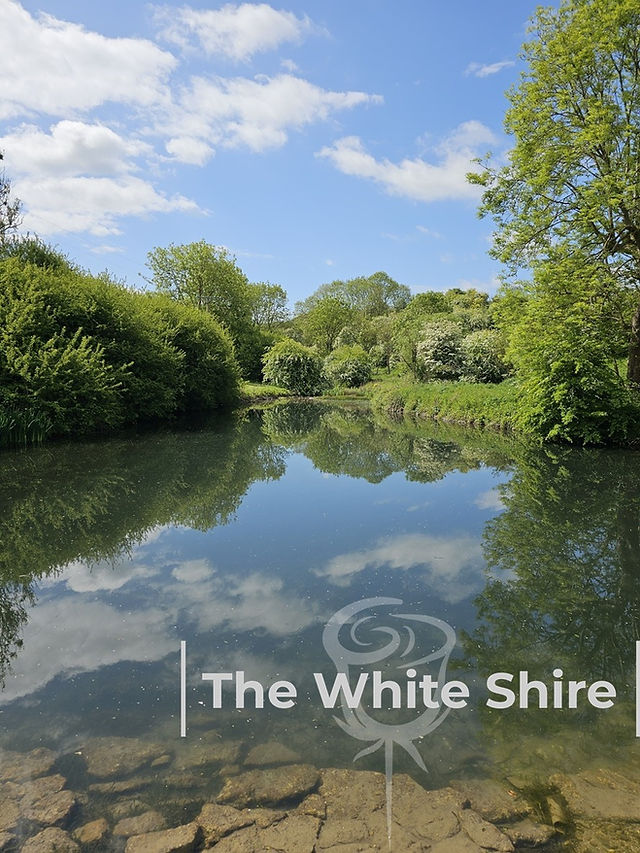
Another obvious feature at Wharram Percy is the millpond.
Watermills were enormously important to medieval communities.
Grain needed to be ground into flour.
Harnessing flowing water provided a much more efficient source of power than relying entirely on human labour.
Archaeological excavation at Wharram Percy revealed a sequence of watermills.
The earliest known mill probably dates from around the middle of the 10th century.
That means milling was taking place here before the Norman Conquest.
Farming Around Wharram Percy
Agriculture dominated life.
Families depended on the surrounding land.
Crops were grown within an open-field system, while livestock provided meat, milk, wool and other essential resources.
The rhythm of village life would have followed the agricultural year.
Ploughing.
Sowing.
Harvesting.
Lambing.
Winter preparation.
A poor harvest could have serious consequences.
Standing in the peaceful valley today, it's easy to romanticise medieval life.
In reality, it could be extremely hard.
The Black Death
The Black Death reached England in 1348 and caused catastrophic loss of life across the country.
Wharram Percy was not immune to the demographic and economic changes affecting medieval communities.
However, it's too simplistic to say the Black Death simply wiped out Wharram Percy.
The village's decline happened gradually.
Changing economic conditions, population movements and landowners' decisions all played a part.
Wharram Percy wasn't abandoned because of one dramatic event.
Why Was Wharram Percy Abandoned?
This is one of the biggest questions visitors naturally ask.
Why did everybody leave?
The answer is complicated.
The village experienced gradual decline rather than a single moment of abandonment.
Economic changes affected farming.
Population patterns changed.
And landowners increasingly saw greater financial opportunities in converting arable farmland into sheep pasture.
Sheep required considerably fewer workers than crop farming.
For villagers, that could have devastating consequences.
Sheep and the Wool Trade
Wool became an extremely valuable commodity.
Landowners realised that grazing sheep could sometimes generate more income than maintaining communities of tenant farmers.
Across parts of medieval and Tudor England, farmland was converted to pasture.
That could mean removing the people who already lived there.
Wharram Percy experienced this process.
Families were gradually displaced as land use changed.
Forced Evictions
By the late 15th and early 16th centuries, some villagers were being forced from their homes.
Houses were demolished.
Land was converted for sheep grazing.
Eventually, very few people remained.
By the early 1500s, the medieval community had effectively disappeared.
It's a sobering thought.
The peaceful grass-covered landscape we enjoy walking through exists partly because families lost their homes and livelihoods centuries ago.
What Happened After the Village Disappeared?
The landscape continued to be used after Wharram Percy was deserted.
Agriculture remained important.
Farm buildings appeared.
The church continued to serve the area for centuries.
The millpond also changed purpose.
After milling ceased, it was used as a watering place for livestock and later as a sheepwash.
So although the medieval village disappeared, people never completely abandoned the landscape.
Why Can We Still See Wharram Percy?
One reason Wharram Percy is so valuable is that a modern settlement wasn't built over the medieval village.
Instead, much of the site remained agricultural land.
That preserved earthworks and foundations beneath grass.
Look carefully and you can trace the outlines of streets, houses and other structures.
It's almost like looking at a three-dimensional archaeological plan.
Once Lyn and I understood what the bumps and hollows represented, the whole landscape started making sense.
Archaeology at Wharram Percy
Wharram Percy became one of Britain's most important archaeological research sites.
Systematic investigation began in 1948.
Over the following decades, archaeologists, historians and students studied almost every aspect of the village.
The work continued for more than 60 years.
Few deserted medieval settlements anywhere in Europe have been investigated so intensively.
As a result, Wharram Percy has transformed our understanding of medieval rural life.
Maurice Beresford and John Hurst
Two names are particularly important in the modern story of Wharram Percy.
Historian Maurice Beresford and archaeologist John Hurst helped lead decades of research into the site.
Their work brought together archaeology, historical documents and landscape study.
This approach was enormously influential.
Rather than simply excavating impressive buildings, researchers wanted to understand how an entire medieval community functioned.
That included ordinary homes and everyday lives.
Britain's Deserted Medieval Villages
Wharram Percy isn't unique.
There are around 3,000 known deserted medieval villages in Britain.
Many disappeared because of economic changes, disease, population decline, enclosure or changing agricultural practices.
Some survive only as subtle bumps beneath fields.
Others have almost completely disappeared.
Wharram Percy stands out because its remains are so extensive and because archaeologists have studied it so thoroughly.
Walking Through a Lost Village
This is what makes visiting Wharram Percy so unusual.
You're effectively walking through a village that no longer exists.
There are no modern roads.
No shops.
No houses.
No traffic.
But the structure of the medieval settlement is still there beneath your feet.
For Lyn and me, that's far more interesting than simply looking at an isolated ruin.
You're exploring an entire lost community.
The Yorkshire Wolds
The landscape surrounding Wharram Percy is part of the Yorkshire Wolds.
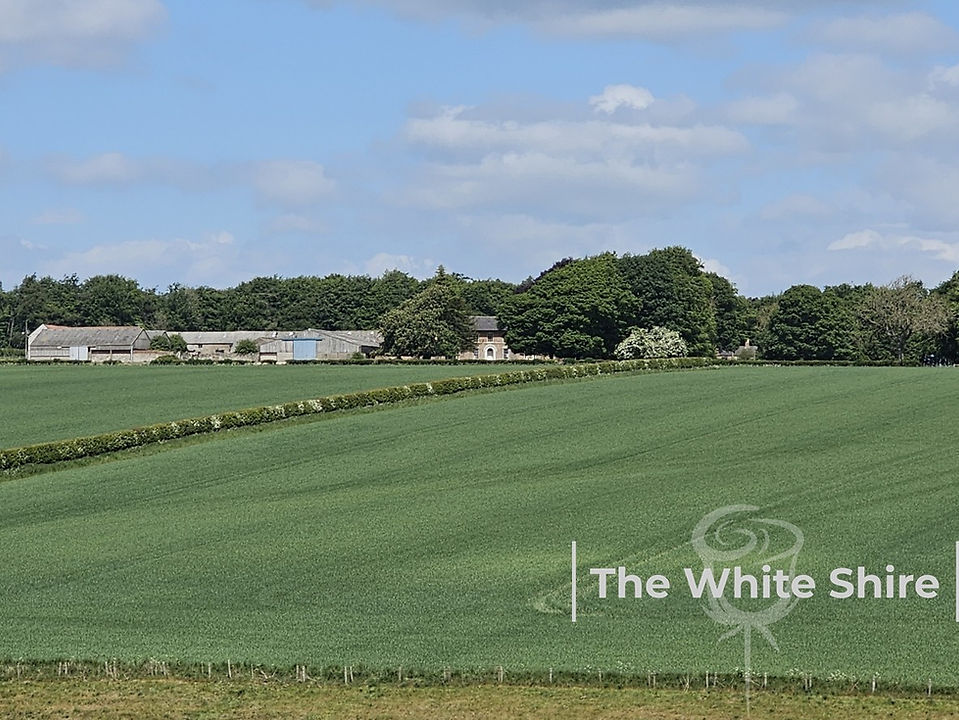
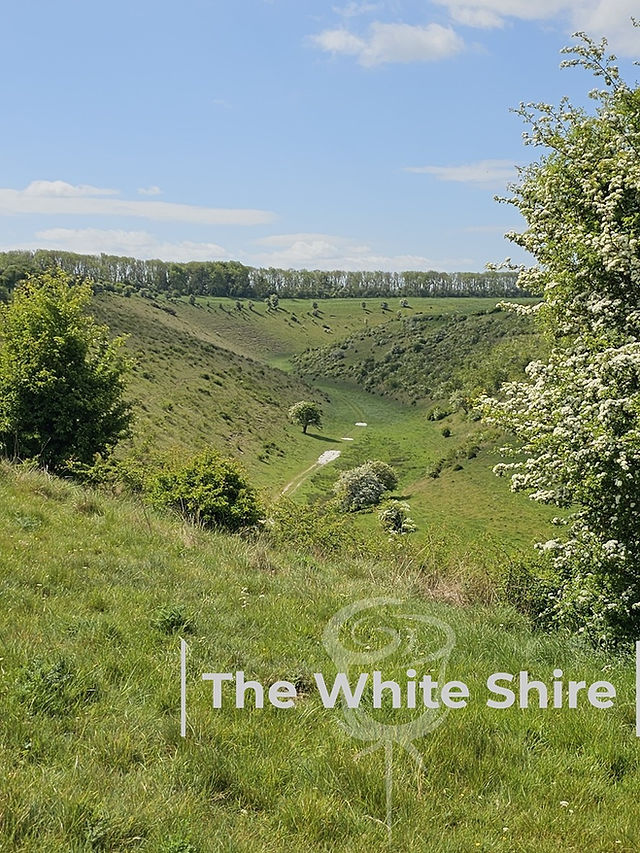
Rolling chalk hills, dry valleys and agricultural land give this part of Yorkshire a distinctive appearance.
The Wolds are very different from the Yorkshire Dales or North York Moors.
The hills tend to be gentler.
Valleys sweep through open farmland.
Woodland appears in sheltered areas.
It's an excellent landscape for walking.
A Quiet Yorkshire Landscape
One of the things we particularly enjoyed about Wharram Percy was the sense of isolation.
The deserted village sits within a quiet valley.
That helps create its atmosphere.
It's much easier to imagine medieval life when you aren't surrounded by modern buildings and busy roads.
Of course, the landscape itself has changed.
But the absence of a modern settlement allows your imagination to fill in the gaps.
Is the Wharram Percy Circular Walk Difficult?
Lyn and I would rate our overall route as easy.
However, we'd add an important qualification.
The approach to Wharram Percy itself includes steeper and potentially muddy sections.
English Heritage also describes the terrain around the site as rugged in places.
So while we personally found the walk easy, conditions can make a significant difference.
We'd recommend sensible walking footwear.
After prolonged rain, we'd expect some sections to be muddier and potentially more slippery.
Is Wharram Percy Suitable for Pushchairs or Wheelchairs?
The historic site itself isn't considered suitable for wheelchairs or buggies.
The approach from the car park includes uneven and steeper ground.
If accessibility is important to you, we'd recommend checking the latest information from English Heritage before travelling.
Our easy rating reflects Lyn's and my experience as walkers.
It shouldn't be interpreted as an accessibility rating.
Are Dogs Allowed at Wharram Percy?
Yes.
Dogs are welcome but should be kept on leads.
Livestock may be present around the paths.
As always, we'd follow the signs and guidance in place when visiting.
Is Wharram Percy Worth Visiting?
Absolutely.
For us, this is one of those places that becomes more interesting the more you know about it.
If you arrive without understanding the history, you may simply see a ruined church surrounded by grassy earthworks.
Learn what those earthworks represent and everything changes.
You're looking at houses.
Streets.
Manor houses.
A mill.
A church.
And the remains of a community that existed for hundreds of years.
How Long Should You Spend at Wharram Percy?
We wouldn't rush it.
Even if your walk isn't particularly long, allow time to explore the deserted village properly.
Read the information around the site.
Look for the house platforms.
Walk around St Martin's Church.
Look at the millpond.
Then stand back and try to imagine the valley filled with houses, animals and people.
That's when Wharram Percy really comes alive.
What Else Can You Explore Near Wharram Percy?
The Yorkshire Wolds provide plenty of opportunities for further walking.
Malton is within easy reach and makes a good addition to a day in this part of North Yorkshire.
The beautiful village of Thixendale is another excellent place to explore.
You're also not far from attractions around Pickering, Castle Howard and the southern edge of the North York Moors.
See what's on in North Yorkshire for events, shows, festivals and ideas for another Yorkshire day out.
When is the Best Time to Walk to Wharram Percy?
We'd consider this walk throughout much of the year.
Spring brings fresh growth to the Wolds.
Summer gives you long daylight hours and greener countryside.
Autumn changes the colours and atmosphere.
Winter can make the deserted village feel particularly atmospheric.
Recent weather is important.
The approach and paths around Wharram Percy can become muddy, so we'd check the forecast and wear appropriate footwear.
Explore More of North Yorkshire
If you've enjoyed discovering Wharram Percy, there are plenty more places to explore with us around North Yorkshire.
Discover more North Yorkshire walks and find another route personally walked, photographed and GPS recorded by Michael and Lyn.
Or explore our complete collection of Yorkshire walks, covering routes across North, West, South and East Yorkshire.
Looking for somewhere else to explore? Discover North Yorkshire attractions and historic places to visit.
You can also see what's on in North Yorkshire for events, shows, festivals and ideas for another day out.
About Michael and Lyn
Michael and Lyn Palmer explore Yorkshire together on foot, personally walking, photographing and GPS recording the routes featured on The White Shire.
Our walking guides combine first-hand experience with practical route information, local history and the character of the towns, villages and countryside we discover along the way.
We're not professional hikers – we simply enjoy getting out together, finding somewhere interesting to walk and discovering more of Yorkshire as we go.
Wharram Percy is exactly the sort of place we love discovering.
It's an enjoyable walk through the Yorkshire Wolds, but the real attraction is finding yourself standing in the middle of a village where Yorkshire families lived hundreds of years ago.
Wharram Percy Circular Walk
View our GPS-recorded Wharram Percy Circular Walk below and use it to help plan your own visit to this remarkable part of the Yorkshire Wolds.
Based on our own experience, Lyn and I would rate our route as easy, although there are steeper and potentially muddy sections around the approach to the deserted village.
Take your time when you reach Wharram Percy.
Don't just look at St Martin's Church and move on.
Look at the grass.
Follow the bumps and hollows.
Try to work out where the houses once stood.
Imagine the livestock, the fields, the mill turning and generations of families walking to church.
Today it's one of the quietest places you could visit.
Centuries ago, it was somebody's home.
For us, that's what makes Wharram Percy such a fascinating Yorkshire walk.








Comments