top of page

Hooton Pagnell Circular Walk

Updated: 6 days ago


The White Shire Walk


Hooton Pagnell Circular Walk – 3.4 Easy Miles in South Yorkshire

Looking for an easy village and countryside walk in South Yorkshire? Our 3.4-mile Hooton Pagnell Circular Walk explores one of the most attractive historic villages around Doncaster, combining peaceful countryside with limestone cottages, an ancient church and centuries of Yorkshire history.

Lyn and I personally walked, photographed and GPS recorded this route for The White Shire.

We'd rate this as an easy walk.

At just 3.4 miles, it's a nice manageable route when you fancy getting out without committing to a particularly long or strenuous walk.

For us, Hooton Pagnell itself is one of the highlights.

This is the sort of Yorkshire village that immediately makes you want to slow down and have a proper look around.


Hooton Pagnell Walk at a Glance

Distance: 3.4 miles

Route type: Circular

Difficulty: Easy – based on our experience

Location: Hooton Pagnell

County: South Yorkshire

Nearby: Doncaster, Brodsworth, South Elmsall and Frickley

Terrain: Village lanes, countryside paths and tracks

Highlights: Hooton Pagnell village, All Saints Church, Hooton Pagnell Hall and surrounding countryside

Walked and photographed by: Michael and Lyn Palmer, The White Shire


Our Hooton Pagnell Circular Walk

Lyn and I found this to be a lovely, easy route.

It's not particularly long and we didn't encounter anything we'd describe as especially demanding.

What really makes the walk for us is the setting.

Hooton Pagnell has retained much of its traditional village character, and the surrounding countryside makes it feel surprisingly peaceful considering you're not far from Doncaster and the former industrial communities of South and West Yorkshire.

At 3.4 miles, you've also got plenty of time to slow down and enjoy the village rather than concentrating on covering a big distance.


Where is Hooton Pagnell?

Hooton Pagnell is a small rural village northwest of Doncaster in South Yorkshire.

It occupies an elevated position on a limestone escarpment overlooking the surrounding countryside.

The village developed largely along Main Street and retains the appearance of an old estate village.

Many of the properties are traditional limestone cottages, with stone boundary walls and mature trees helping give Hooton Pagnell its distinctive character. The conservation area contains 29 listed structures. (hootonpagnell-pc.gov.uk)

That's quite remarkable for such a small place.


A Brief History of Hooton Pagnell

Hooton Pagnell has a history stretching back at least to the Norman period.

The settlement appears in the Domesday Book as Hotone.

The name is thought to mean something along the lines of "town on the hill" or "high dwelling place", which makes perfect sense when you see the village's elevated position.

The second part of the modern name came from the Norman Paganel family, who acquired the manor after the Norman Conquest. (hootonpagnell-pc.gov.uk)

Over time, Hotone became Hooton Pagnell.

It's another example of how the names of Yorkshire villages often preserve clues about their history.


Walking Through Hooton Pagnell Village

We'd definitely recommend taking your time through the village.

This isn't somewhere we'd simply hurry through to get onto the next footpath.

Traditional cottages, limestone walls, old farm buildings and mature trees give the village plenty of character.

Hooton Pagnell Parish Council describes it as an estate village originally made up of several farms along the main street, and you can still see evidence of that agricultural layout today. (hootonpagnell-pc.gov.uk)

For Lyn and me, these are the sorts of details that make a village walk interesting.


All Saints Church

One of the most important historic buildings in Hooton Pagnell is All Saints Church.

The church is Grade I listed and forms part of the historic heart of the village. (hootonpagnell-pc.gov.uk)

Together with Hooton Pagnell Hall and the surrounding limestone buildings, it creates a lovely traditional Yorkshire village scene.

Even if you don't spend long exploring the church, it's worth stopping to have a look rather than simply walking past.

That's one advantage of a shorter route like this.

You've got time.


Hooton Pagnell Hall

Hooton Pagnell Hall is another major landmark.

The hall is Grade II* listed and has origins dating back centuries. Historic England records medieval fabric within the building, with later alterations and additions. (Historic England)

The Hall's own history records the property in connection with the Domesday Book and states that the Warde-Norbury family has been associated with it for more than 320 years. (Hooton Pagnell Hall)

The hall itself is private, so this isn't somewhere we'd suggest wandering into.

But its presence, together with the church and historic village, gives Hooton Pagnell a character that feels quite different from many surrounding settlements.


A Traditional Yorkshire Estate Village

One of the things we liked about Hooton Pagnell is that you can still understand how the village developed.

The farms.

The cottages.

The church.

The hall.

The surrounding agricultural land.

They're all connected.

Rather than individual historic buildings scattered through a modern development, much of the old village character has survived together.

For us, that makes walking through Hooton Pagnell particularly enjoyable.


Out into the Countryside

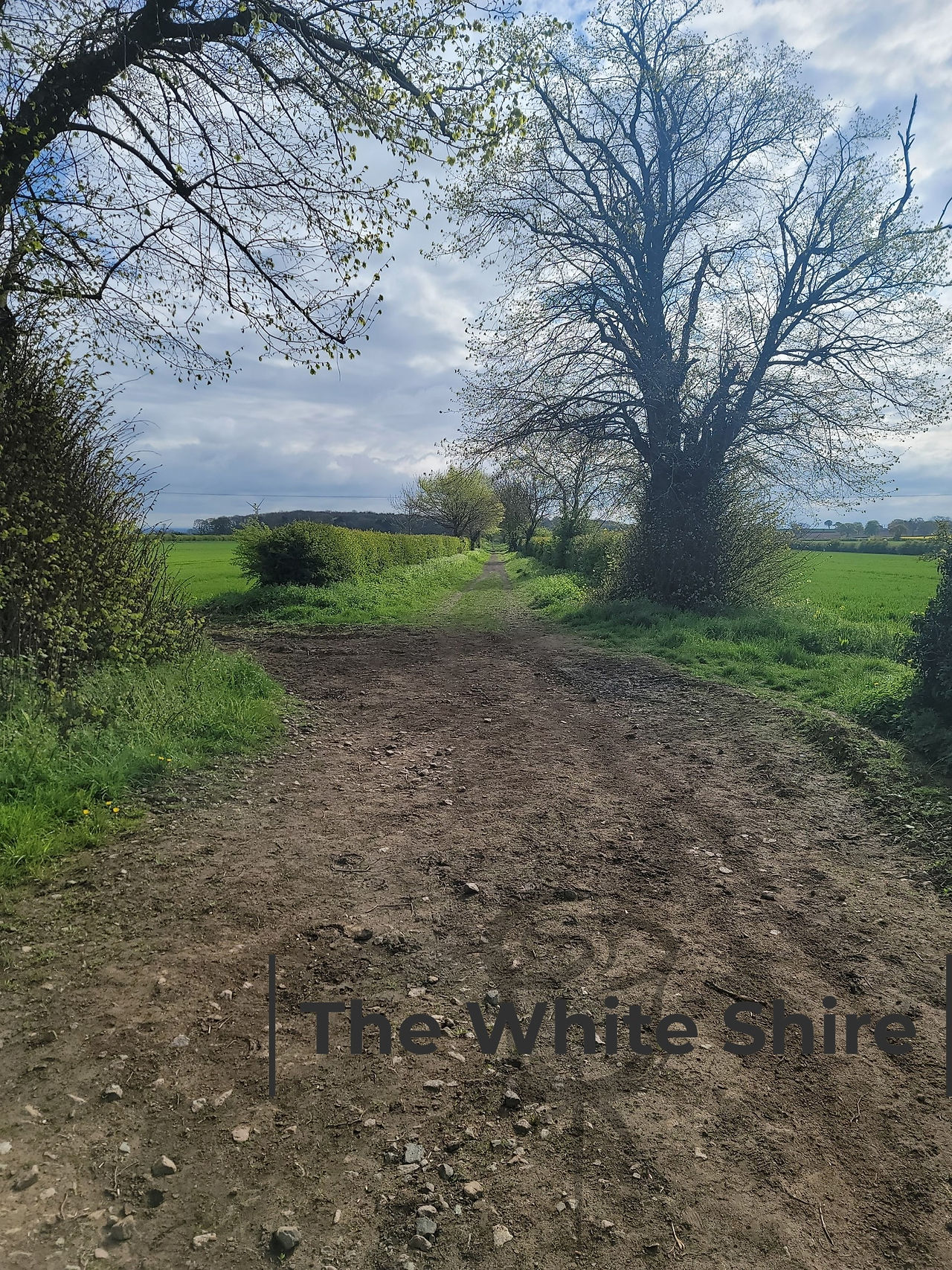
Once you move beyond the village, the surrounding countryside gives the walk another character.

This is an agricultural landscape of fields, paths and tracks rather than dramatic hills or open moorland.

That's one of the reasons we've rated the route easy.

You can simply settle into the walk and enjoy the surroundings.

And because Hooton Pagnell occupies slightly higher ground, there are opportunities to look out across the surrounding landscape.


A Landscape That Changed with Industry

Although Hooton Pagnell itself has retained a strongly rural character, the wider area changed enormously with the arrival of coal mining.

Nearby communities became closely associated with the South Yorkshire coalfield.

Collieries, railways and mining villages transformed parts of the landscape around Doncaster.

Hooton Pagnell remained something of a contrast.

Its estate-village character and agricultural surroundings survived while industrial communities developed only a few miles away.

Today, with many of those industries gone, the contrast is less obvious.

But understanding that history adds another layer to the walk.


Is the Hooton Pagnell Circular Walk Difficult?

Based on our experience, no.

Lyn and I rate our 3.4-mile Hooton Pagnell Circular Walk as easy.

It's relatively short and we didn't encounter anything we'd consider particularly demanding.

As with almost any countryside walk, recent weather can affect conditions.

Field paths may become muddy following prolonged rain, so we'd still recommend appropriate walking footwear.


Is This Walk Suitable for Beginners?

We think so.

At only 3.4 miles, it's a manageable distance for anyone beginning to explore Yorkshire on foot.

There's no need to rush it either.

If you're relatively new to countryside walking, shorter routes like Hooton Pagnell can be a good introduction before progressing onto some of our five, six and seven-mile walks.

The historic village also gives you plenty to look at without needing to cover a huge distance.


How Long is the Hooton Pagnell Walk?

Our GPS-recorded Hooton Pagnell Circular Walk measures 3.4 miles. (The White Shire)

How long it takes naturally depends on your pace and how often you stop.

Lyn and I don't rush our walks.

We're usually taking photographs, looking at buildings and stopping whenever something catches our attention.

On a route like this, we'd definitely allow some extra time to explore the village.

There's little point walking through somewhere as attractive as Hooton Pagnell without having a proper look around.


When is the Best Time to Walk Hooton Pagnell?

We'd consider this a walk for most of the year.

Spring and summer bring greener countryside and longer daylight hours.

Autumn changes the colours around the village and surrounding trees.

Winter can reveal more of the structure of the historic buildings once leaves have fallen.

For us, recent rainfall would probably be a bigger consideration than the season.

If the weather has been particularly wet, expect countryside sections to be muddier.


What Else Can You Explore Nearby?

Brodsworth Hall is one of the obvious places to visit while you're in this part of South Yorkshire.

Doncaster is also within easy reach, while the surrounding villages provide plenty more opportunities for walking.

This part of Yorkshire is particularly interesting because you have rural villages, historic estates and the remains of the South Yorkshire coalfield all within a relatively small area.


Explore More Yorkshire Walks

Lyn and I have personally walked and photographed routes throughout West, South, North and East Yorkshire.

Some are short and easy like Hooton Pagnell.

Others involve longer distances, hills, moorland or woodland.

What they all have in common is that we've actually been out and walked them ourselves.


About Michael and Lyn

Michael and Lyn Palmer explore Yorkshire together on foot, personally walking, photographing and GPS recording the routes featured on The White Shire.

Our walking guides are based on our own experiences and combine practical information with some of the history and character of the places we discover.

We're not professional hikers. We're simply a husband and wife who enjoy getting out together, finding somewhere interesting to walk and discovering more of Yorkshire along the way.

Hooton Pagnell is exactly the sort of place we enjoy finding.

It's not a long or difficult walk.

Instead, it's an easy few miles through a lovely old Yorkshire village and the surrounding countryside.


Hooton Pagnell Circular Walk – Our Verdict

Our GPS-recorded Hooton Pagnell Circular Walk measures 3.4 miles.

Lyn and I rate it as an easy walk.

For us, the village itself is what makes this route stand out.

The limestone cottages, old farms, All Saints Church and Hooton Pagnell Hall give you a glimpse of a Yorkshire village whose history stretches back beyond the Domesday Book.

Then you've got the surrounding countryside to enjoy as well.

At just 3.4 miles, it's not a walk that's going to take up your whole day.

But sometimes that's exactly what we're looking for.

A nice easy Yorkshire walk, somewhere interesting to explore and a bit of history to discover along the way.

Summary for Wix


  • Hooton Pagnell walk.
    Hooton Pagnell
  • Hooton Pagnell walk.
    Hooton Pagnell
  • Hooton Pagnell walk.
    Hooton Pagnell
  • Hooton Pagnell walk.
    Hooton Pagnell
  • Hooton Pagnell walk.
    Hooton Pagnell
  • Hooton Pagnell walk.
    Hooton Pagnell
  • Hooton Pagnell walk.
    Hooton Pagnell
  • Hooton Pagnell walk.
    Hooton Pagnell
  • Hooton Pagnell walk.
    Hooton Pagnell
  • Hooton Pagnell walk.
    Hooton Pagnell
  • Hooton Pagnell walk.
    Hooton Pagnell
  • Hooton Pagnell walk.
    Hooton Pagnell
  • Hooton Pagnell walk.
    Hooton Pagnell
  • Hooton Pagnell walk.
    Hooton Pagnell
  • Hooton Pagnell walk.
    Hooton Pagnell
  • Hooton Pagnell walk.
    Hooton Pagnell
  • Hooton Pagnell walk.
    Hooton Pagnell
  • Hooton Pagnell walk.
    Hooton Pagnell
  • Hooton Pagnell walk.
    Hooton Pagnell
  • Hooton Pagnell walk.
    Hooton Pagnell
  • Hooton Pagnell walk
    Hooton Pagnell
  • Hooton Pagnell walk
    Hooton Pagnell
  • Hooton Pagnell walk
    Hooton Pagnell
  • Hooton Pagnell walk
    Hooton Pagnell
  • Hooton Pagnell walk
    Hooton Pagnell
  • Hooton Pagnell walk
    Hooton Pagnell
  • Hooton Pagnell walk
    Hooton Pagnell
  • Hooton Pagnell walk
    Hooton Pagnell


Comments


bottom of page